Iron deficiency, often referred to as low iron, is one of the leading contributors to the global burden of disease, and it mainly affects children and women before the menopause. It develops slowly: iron stores are first depleted silently, then tiredness, breathlessness or difficulty concentrating appear, sometimes well before anaemia. Here is how to recognise it, confirm it with a blood test and correct it, based on the research.
Key points
- Iron deficiency can exist without anaemia: ferritin, which reflects iron stores, falls before haemoglobin does.
- In tired, non-anaemic women with ferritin below 50µg/L, 80mg of iron per day for 12 weeks reduced the fatigue score by 47.7%, compared with 28.8% on placebo.
- In women with low iron stores, 14 doses of 60mg given on alternate days led to 175mg of iron absorbed in total, compared with 131mg with daily dosing.
- EFSA sets the reference intakes at 11mg per day for men and 16mg for premenopausal women, and a safe level of intake of 40mg per day for adults.
What does iron do in the body?
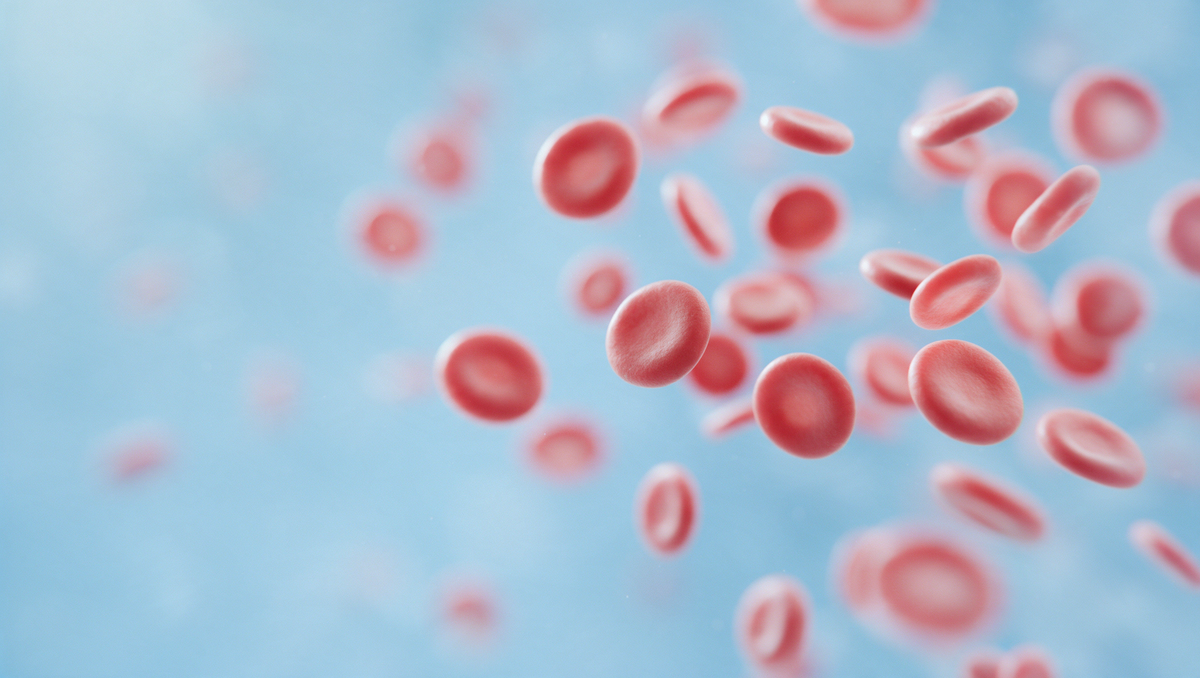
Iron is at the centre of haemoglobin, the protein in red blood cells that carries oxygen from the lungs to the tissues. It is also found in myoglobin in the muscles and in many enzymes involved in energy production. European Regulation (EU) No 432/2012 recognises several roles of iron:
- “Iron contributes to normal formation of red blood cells and haemoglobin”;
- “Iron contributes to normal oxygen transport in the body”;
- “Iron contributes to normal energy-yielding metabolism”;
- “Iron contributes to the reduction of tiredness and fatigue”;
- “Iron contributes to normal cognitive function”;
- “Iron contributes to the normal function of the immune system”;
- “Iron has a role in the process of cell division”.
One important feature: the body has no physiological mechanism for excreting excess iron. Its balance depends almost entirely on intestinal absorption, regulated by a hormone produced by the liver, hepcidin.
What are the symptoms of low iron?
The signs are not very specific, which explains why a deficiency often goes unnoticed. The most common are:
- tiredness, weakness and reduced exercise tolerance;
- difficulty concentrating;
- digestive problems;
- poorer temperature regulation and weakened immune defences, once anaemia sets in;
- in children, impaired psychomotor and cognitive development.
These symptoms have many other possible causes: lack of sleep, stress, thyroid disorders, other deficiencies. Our article Why am I always tired? helps to sort through the causes, and our article on brain fog looks at the possible explanations when it is concentration that is failing.
Iron deficiency or iron deficiency anaemia: what is the difference?
Iron deficiency develops in three stages. The stores, held mainly in the liver in the form of ferritin, decrease first. Next comes deficiency without anaemia, in which the tissues are already short of iron while haemoglobin remains normal. Iron deficiency anaemia is only the final stage, when red blood cell production can no longer keep up.
The review published in The Lancet in 2021 stresses that clinical and functional problems can appear as early as the non-anaemic stage. This is why a normal haemoglobin level is not enough to rule out a deficiency when tiredness persists.
What ferritin level indicates iron deficiency?
Measuring blood ferritin is the reference test, recommended by the World Health Organization (WHO) in its 2020 guideline. The thresholds used vary according to the context:
| Situation | Ferritin threshold | Source |
|---|---|---|
| Diagnosis of deficiency in a person with anaemia | Below 45µg/L (sensitivity 85%, specificity 92%) | American Gastroenterological Association (AGA), 2020 |
| Stricter threshold, in a person with anaemia | Below 15µg/L (sensitivity 59%, specificity 99%) | AGA, 2020 |
| Tired, non-anaemic women included in a trial | Below 50µg/L | Vaucher, 2012 |
| Adult with infection or inflammation | Below 70µg/L | WHO, 2020 |
| Risk of iron overload, healthy adult | Above 150µg/L (menstruating women) or 200µg/L (men and non-menstruating women) | WHO, 2020 |
Inflammation complicates interpretation: ferritin rises during an infection or an inflammatory disease, which can mask a genuine deficiency. The doctor may then add other markers, such as transferrin saturation or C-reactive protein.
What causes low iron?
Deficiency results from an imbalance between losses, needs and absorption. The best-documented risk situations are:
- heavy periods;
- pregnancy;
- frequent blood donation;
- a poorly balanced vegetarian or vegan diet;
- digestive diseases and surgery, including coeliac disease, which reduce absorption;
- certain medicines, such as proton pump inhibitors, which reduce stomach acidity.
The Lancet review recommends looking for a cause in all patients with iron deficiency, systematically considering screening for coeliac disease and performing an endoscopy in men and postmenopausal women with iron deficiency anaemia.
Which foods provide the most iron, and how can you absorb it better?
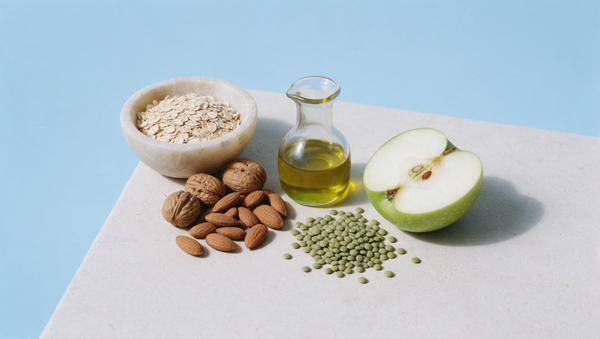
Dietary iron comes in two forms. Haem iron, found in meat, fish and seafood, is better absorbed. Non-haem iron, the only form found in plants and fortified foods, is less well absorbed and depends greatly on the rest of the meal. Absorption is estimated at 14 to 18% for a mixed diet and 5 to 12% for a vegetarian diet.
| Food (portion) | Iron | Form |
|---|---|---|
| Cooked oysters (85g) | 8mg | Haem and non-haem |
| Pan-fried beef liver (85g) | 5mg | Haem and non-haem |
| Cooked lentils (half a cup) | 3mg | Non-haem |
| Cooked spinach (half a cup) | 3mg | Non-haem |
| Firm tofu (half a cup) | 3mg | Non-haem |
| Braised beef (85g) | 2mg | Haem and non-haem |
Several simple measures improve the absorption of plant iron:
- Add a source of vitamin C to the meal (citrus fruit, kiwi, peppers): “Vitamin C increases iron absorption”. In an absorption study, ascorbic acid clearly counteracted the inhibitory effect of phytates.
- Keep tea and coffee away from meals: their polyphenols reduce the absorption of non-haem iron; for tea, a study in volunteers attributed this as early as 1975 to the formation of insoluble complexes with tannins.
- Take phytates into account in wholegrains and pulses: 25mg of phytate phosphorus added to bread rolls reduced iron absorption by 64%.
- Space out calcium (dairy products, supplements): it may reduce the absorption of both forms of iron, an effect that remains debated.
How to correct iron deficiency: dose, timing and form
Treatment of a confirmed deficiency is a matter for a doctor, who sets the dose and duration and looks for the cause. Recent studies have nevertheless changed the way oral iron intake is approached.
Alternate days rather than every day. In young women with low iron stores, hepcidin remained elevated 24 hours after a dose of 60mg or more, and fractional absorption of the next dose fell by 35 to 45%. In 40 women with low iron stores (ferritin ≤ 25µg/L), 60mg given on alternate days resulted in cumulative absorption of 21.8% compared with 16.3% with daily dosing, i.e. 175mg absorbed compared with 131mg for the same number of doses (14, over 28 days instead of 14). Splitting the dose into two doses a day did not increase absorption. These results still need to be confirmed in people with anaemia.
Frequent digestive side effects. A meta-analysis of 43 trials (6,831 adults) shows that ferrous sulphate markedly increases digestive side effects compared with placebo (odds ratio of 2.32, from 20 placebo-controlled trials). Iron bisglycinate, iron bound to two glycine molecules, has been associated in pregnant women with higher haemoglobin and fewer digestive side effects than other forms, according to a meta-analysis of 17 trials. No difference was observed in children, and data remain limited in men and in women who are not pregnant. To compare dosage forms, our guide capsule, softgel or tablet reviews the excipients.
Blood test monitoring. In the Vaucher trial, ferritin increased by an average of 11.4µg/L compared with placebo after 12 weeks; the authors suggest checking effectiveness with a blood test after six weeks.
Iron is not the only nutrient whose form changes tolerance: the same questions arise for zinc and for magnesium.
How much iron do you need, and what are the risks of too much?
In 2015, the European Food Safety Authority (EFSA) set reference intakes of 11mg per day for men and postmenopausal women, and 16mg per day for premenopausal women, including during pregnancy and breastfeeding.
More is not better. In 2024, EFSA was unable to set a tolerable upper intake level, but it defined a safe level of intake of 40mg per day for adults, including pregnant and breastfeeding women, from all sources combined. Iron overload is toxic to the organs. People with haemochromatosis, a genetic disease that causes iron to accumulate, should not take iron supplements. Supplements must also be kept out of the reach of children: accidental ingestion is a leading cause of fatal poisoning in children under 6. Finally, when taken at the same time, iron reduces the effectiveness of levothyroxine, a thyroid medication: some patient leaflets recommend a four-hour gap.
Frequently asked questions
Should iron deficiency without anaemia be treated?
It at least deserves to be discussed with a doctor, especially if you are tired. In a trial of 198 menstruating women aged 18 to 53, who were tired, non-anaemic and had ferritin below 50µg/L, recruited in general practice in France, supplementation reduced fatigue more than placebo, with no significant effect on quality of life, anxiety or depression.
How long does it take to raise your iron levels?
Several weeks to several months: in the Vaucher trial, the gain in ferritin was still modest after 12 weeks. The duration depends on the extent of the deficiency, the dose, digestive tolerance and treatment of the cause.
Should you take iron in the morning on an empty stomach?
The absorption studies cited above gave iron in the morning, on an empty stomach, as a single dose: this is the best-evaluated regimen. If the stomach tolerates it poorly, taking it with a little food is a common compromise, while avoiding tea, coffee and dairy products at the same time.
Do tea and coffee block iron absorption?
They reduce it when they are consumed with a meal. For tea, the 1975 study observed this inhibition with bread, a rice-based meal and iron solutions. It is better to drink them away from meals rich in plant iron.
Are vegetarians bound to be low in iron?
No, but their margin is narrower, because plant iron is less well absorbed. Pulses, tofu and a source of vitamin C with meals help to meet needs; if tiredness persists, a ferritin test can check iron stores.
Can you take iron without medical advice?
It is best to avoid supplementing without a prior blood test: tiredness has other causes, a deficiency calls for a search for its origin, and excess iron is not harmless. Our article food supplements for tiredness: how to choose explains why a check-up comes before any supplementation, and our comparison which vitamin for tiredness places iron among the other nutrients.
Conclusion
Iron deficiency is common, especially in menstruating women, and can affect energy levels well before anaemia develops. The right approach is to confirm it with a ferritin test interpreted in context, then look for the cause. Diet, with haem iron or plant iron combined with vitamin C and kept away from tea, remains the foundation. When supplementation is necessary, absorption studies suggest that a single dose on alternate days is better absorbed; it should be taken under medical supervision, with a follow-up blood test.
Sources
- Pasricha SR, Tye-Din J, Muckenthaler MU, Swinkels DW. Iron deficiency. Lancet. 2021;397(10270):233-248. doi:10.1016/S0140-6736(20)32594-0
- World Health Organization. WHO guideline on use of ferritin concentrations to assess iron status in individuals and populations. Geneva: WHO; 2020. NBK569880
- Ko CW, et al. AGA Clinical Practice Guidelines on the Gastrointestinal Evaluation of Iron Deficiency Anemia. Gastroenterology. 2020;159(3):1085-1094. doi:10.1053/j.gastro.2020.06.046
- Vaucher P, et al. Effect of iron supplementation on fatigue in nonanemic menstruating women with low ferritin: a randomized controlled trial. CMAJ. 2012;184(11):1247-1254. doi:10.1503/cmaj.110950
- Stoffel NU, et al. Iron absorption from oral iron supplements given on consecutive versus alternate days and as single morning doses versus twice-daily split dosing in iron-depleted women: two open-label, randomised controlled trials. Lancet Haematol. 2017;4(11):e524-e533. doi:10.1016/S2352-3026(17)30182-5
- Moretti D, et al. Oral iron supplements increase hepcidin and decrease iron absorption from daily or twice-daily doses in iron-depleted young women. Blood. 2015;126(17):1981-1989. doi:10.1182/blood-2015-05-642223
- Tolkien Z, et al. Ferrous sulfate supplementation causes significant gastrointestinal side-effects in adults: a systematic review and meta-analysis. PLoS One. 2015;10(2):e0117383. doi:10.1371/journal.pone.0117383
- Fischer JAJ, et al. The effects of oral ferrous bisglycinate supplementation on hemoglobin and ferritin concentrations in adults and children: a systematic review and meta-analysis of randomized controlled trials. Nutr Rev. 2023;81(8):904-920. doi:10.1093/nutrit/nuac106
- Hurrell R, Egli I. Iron bioavailability and dietary reference values. Am J Clin Nutr. 2010;91(5):1461S-1467S. doi:10.3945/ajcn.2010.28674F
- Hallberg L, Brune M, Rossander L. Iron absorption in man: ascorbic acid and dose-dependent inhibition by phytate. Am J Clin Nutr. 1989;49(1):140-144. doi:10.1093/ajcn/49.1.140
- Disler PB, et al. The effect of tea on iron absorption. Gut. 1975;16(3):193-200. doi:10.1136/gut.16.3.193
- EFSA NDA Panel. Scientific Opinion on Dietary Reference Values for iron. EFSA Journal. 2015;13(10):4254. doi:10.2903/j.efsa.2015.4254
- EFSA NDA Panel. Scientific opinion on the tolerable upper intake level for iron. EFSA Journal. 2024;22(6):8819. doi:10.2903/j.efsa.2024.8819
- National Institutes of Health, Office of Dietary Supplements. Iron – Fact Sheet for Health Professionals. Updated 4 September 2025. ods.od.nih.gov
- Commission Regulation (EU) No 432/2012 of 16 May 2012 establishing a list of permitted health claims made on foods, other than those referring to the reduction of disease risk and to children’s development and health. EUR-Lex
Food supplements are not a substitute for a varied and balanced diet and a healthy lifestyle. Ask a healthcare professional for advice if you are taking medication, are pregnant or are breastfeeding.